
Curaçao's LOK Reform One Year Later: Did Anything Actually Change for Affiliates?
A year ago, the National Ordinance on Games of Chance (LOK) marked a key defining moment in the iGaming landscape. It was perceived as either the end of cheap, lightly regulated Curaçao gambling licenses or the beginning of a cleaner, more credible licensing jurisdiction for operators. Here, rather than repeating the licensing details explained in every other article, we want to focus on what matters. With our affiliate-first approach, we aim to explain what actually changed in terms of access to affiliate programs, compliance, and payments, among other aspects.

We are now expanding into B2C, publishing player-facing casino reviews and category pages for players across international markets.
The two sides feed each other. We know exactly how these bonus terms are drafted before they are published on the bonus page. We know why a withdrawal request which should take ‘1–3 days’ to process can remain in the ‘manual review’ stage for a whole week. We are aware of what goes on behind the scenes when you receive a KYC alert.
That is why, when we review a casino, we don’t just look at its homepage. We also scrutinise the small print. We read through the entire terms and conditions and the cashier section, as we know the summary rarely tells the whole story.
On every page, you will notice we hold ourselves to the same standard. We answer your questions directly. We state findings, not opinions. And we don’t sugarcoat anything just to make a casino look good. We call out limitations that could catch you off guard.
Whichever side of the industry you are on, we hold every page to the same standard and we don't sugarcoat anything to make a casino or a programme look better than it is.
Recap — What LOK was Supposed to Change
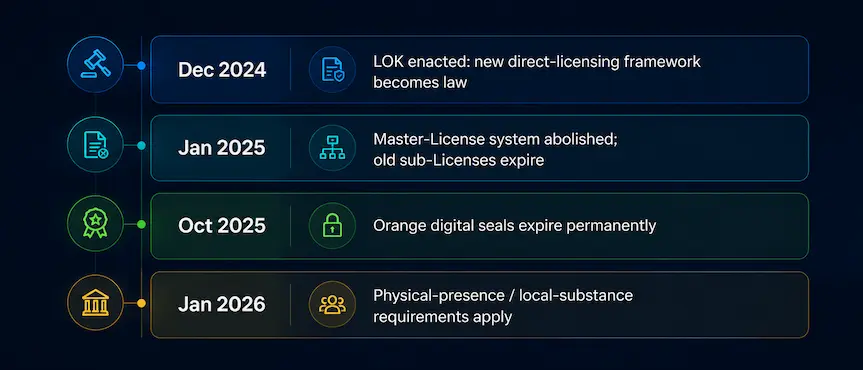
With the enactment of the National Ordinance on Games of Chance, Curaçao introduced a new licensing structure, with the Curaçao Gaming Authority (CGA) as the jurisdiction’s only licensing and regulatory authority. The CGA is also responsible for supervising and ensuring compliance across licensed operators.
Curaçao worked together with the Netherlands to introduce the new regulatory framework, with the Dutch government requiring a complete overhaul of the licensing system. The goal was to modernize the gambling framework, ensure compliance, combat money laundering, and improve Curaçao’s reputation as an offshore licensing jurisdiction.
The effects of the LOK reform on affiliates go beyond the legal aspects. Affiliates might now worry about possible disruptions, a limited number of operators, payment difficulties, and stricter marketing rules. Even with this uncertainty, opportunities to promote brands still exist.
What Actually Changed for Affiliates
Rather than explaining the LOK as either a successful or failed regulatory reform, we have focused on its actual impacts on affiliates looking to drive traffic to online casino sites and sportsbooks. In the following sections, we assess it dimension by dimension, highlighting its potential advantages and disadvantages for online gambling affiliate programs one year later.
Fewer Programs — But Steadier Ones
Access to fewer affiliate programs for marketing Curaçao-licensed gambling platforms is one of the clearest impacts of the jurisdiction’s LOK reform. The new regulatory framework raised the minimum B2C license fee to €47,450 per year, making it difficult for crypto-first startups with limited resources to comply and continue with business. Moreover, operators are required to meet new expectations around building local substance and incorporation in Curaçao.
Some renowned casino sites transitioned from the old system to the new regulatory regime seamlessly. Others could not meet the new regulatory requirements, so they completely stopped operations or obtained licenses from other jurisdictions, such as Anjouan.
These changes have led to a small number of affiliate programs for Curaçao-licensed gambling brands. Affiliates have limited choices, and some have lost previously profitable partnerships. The notable benefit is that the remaining operators are generally more stable and well-capitalized. They are also committed to complying with the new laws and are likely to maintain their operations and keep paying affiliate commissions as per the agreement.
Compliance Rolled Downhill From Operators to You
The single most important change is not the license itself, but who carries the compliance risk every day. Under Curaçao’s old master license system, country restrictions and compliance were often treated as responsibilities further up the chain. Therefore, the operator or master licensee was expected to manage players referred from a GEO-restricted country.
Operator and affiliate compliance requirements changed under the LOK reform. The new rules require each operator to hold its own license and handle territory restrictions and GEO-blocking independently. This direct license condition has also transferred responsibility to affiliates who partner with gambling sites licensed in Curaçao.
The practical impact of the new compliance rules is that affiliates now enter agreements with stricter terms and conditions. For example, they may be prohibited from sending traffic from specific countries. Moreover, publishers marketing Curaçao gaming sites face tighter creative and ad-compliance terms and clauses that push liability for non-compliant traffic. This means that operators may withhold commissions if you break the rules.
Another notable effect is that operators facing license revocation due to territorial violations are likely to assess affiliate traffic rigorously. Before LOK, a master license holder was expected to manage clicks from restricted jurisdictions, but affiliates are now responsible for ensuring compliance under the new regime.
The “Certificate of Service Provider” Question — Do You Actually Need One?
LOK introduced a Certificate of Service Provider, a category intended for businesses that support the gambling industry through affiliate marketing, hosting services, and software provision. The certificate exists as a category, but there has been minimal enforcement aimed at ordinary affiliates one year after the government of Curaçao enacted the LOK.
Implementation is generally taking place at a slower pace than many expected when the new laws came into effect. This can be attributed to the regulatory CGA’s stability issues.
The difference is largely one of scale and the type of affiliate business you are running. If you are just an ordinary affiliate using a website to promote Curaçao-licensed operators, there is little indication that you must obtain a Certificate of Service Provider from the CGA. In contrast, a large affiliate network or marketing business with a well-established commercial footprint in the jurisdiction must pay close attention as the LOK regime continues to evolve.
Getting Paid — Payments, Banking and Commercial Terms
One objective of establishing LOK was to make banks and payment providers see Curaçao as a trustworthy licensing jurisdiction for operators in a high-risk industry. The newly established laws moved the CGA’s regulatory requirements closer to those of the MGA and UKGC. While there are signs of improved credibility one year later, the transformation has been gradual.
Even with the introduction of LOK, payment processing and banking friction are still common problems associated with the jurisdiction. Payments are more challenging in Curaçao than in other top-tier licensing jurisdictions. This has a notable impact on how gambling operators licensed by the CGA conduct business.
Affiliates are generally concerned about the reliability of payments when they earn commissions, access to crypto payment methods, more structured reporting, and clearer commercial terms with serious operators. Consolidation has reduced the risk of lightly capitalized brands leaving affiliates with unpaid commission.
Brand Trust and Conversion
Under LOK, a direct gambling license issued by the CGA is a stronger trust signal than a permit issued under the previous sublicense regime. Retiring the orange seal marked the end of a symbol that many associated with Curaçao’s wild west era, where lack of proper regulatory oversight made it difficult for legitimate operators to gain trust in the industry.
For affiliates targeting players who visit Curaçao casinos, a direct CGA license is a clear sign of credibility. The phrase “licensed under LOK” is now a trust hook that publishers can use in their casino or sportsbook reviews, platform comparison pages, and operator profiles to attract players looking for reputable brands. It can help reinforce the message that a particular gambling site is compliant. However, an affiliate’s expectations must be realistic.
What Didn't Change (Despite the Headlines)
Curaçao remains an accessible and crypto-friendly jurisdiction with a simpler licensing structure than the industry’s strictest regulators, such as the Malta Gaming Authority and UK Gambling Commission. The LOK licensing system allows operators to enter the market easily despite higher fees. Therefore, the ecosystem is still active, creating opportunities for casino and sports betting affiliates to market CGA-licensed online gambling brands.
Some Curaçao-licensed sites that existed before LOK are still operating, and new brands are emerging. One year on, there are no signs of an aggressive crackdown on affiliates. Moreover, enforcement of the new rules has been delayed due to regulator-related issues, including the resignation of the CGA’s supervisory board members and governance problems occurring during the critical transition process.
It would be a mistake for an affiliate to assume that slow enforcement means absence of rules. Instead, you should treat the slow implementation as breathing room. The LOK regulatory framework and CGA exist to ensure compliance, and operators are gradually adjusting to meet the requirements.
The Affiliate Verdict — A One-Year Scorecard
The table below shows how different dimensions affecting affiliates have changed one year later.
|
Dimension |
Did it change? |
Verdict |
|
Program availability |
Big change |
Fewer brands, sturdier survivors |
|
Compliance burden |
Big change |
Geo/liability pushed onto affiliates |
|
Licensing/certification pressure |
Some change |
Category exists; light enforcement so far |
|
Payments & getting paid |
Some change |
Modestly cleaner, crypto still normal |
|
Player trust/conversion |
Some change |
Direct CGA license a better signal |
|
Overall cost-to-play |
Barely moved |
Still accessible vs MGA/UKGC |
What Affiliates Should Do Now
Here are some practical moves for affiliates marketing CGA-regulated brands today:
- Confirm which Curaçao brands you previously promoted have obtained new CGA licenses or went offshore without notice.
- Re-read your affiliate agreements for updated country restrictions and liability clauses.
- Tighten your own geo-targeting to avoid sending prohibited affiliate traffic to operators.
- Choose well-capitalized, Curaçao-licensed platforms with reliable payments.
- Keep an eye on the Certificate of Service Provider situation if you run a larger network.
- Mention verifiable CGA licenses in your content as a trust signal.
You can also use Gaffg's online casino affiliate program reviews and affiliate-manager access to verify brands.
Final Words — Did Anything Actually Change?
Curaçao’s LOK reform has had a significant impact on individuals and businesses in the affiliate scene, but not in the way many expected. Just like operators licensed under the new regulatory framework, affiliates have compliance responsibilities. Another notable change is that publishers have access to a smaller pool of CGA-licensed brands with affiliate programs. One year has passed since enforcement began, and while the process is still slow, it creates an opportunity for affiliates to prepare.